THE OPERATIONS PLAYBOOK
Build a business that knows what to do without asking you.
Browse practical articles on capturing operational knowledge, closing the Execution Gap, and giving your team the clarity to execute.
ALL INSIGHTS
Ideas you can put to work.
Each summary leads to a complete article with practical guidance for owners and operators building a business that runs beyond them.
 Latest · The Execution GapWeek 25 - Why Visibility Still Leaves You as the BottleneckBetter visibility can leave founders carrying every decision. Give recurring problems an owner, clear authority, an escalation boundary, and a review so your team can respond and improve.September 22, 20269 min readRead full article →
 The Execution GapLevel 1 - The Firefighter Trap: Why You Don't Have an AI Problem (You Have a Foundation Problem)You don't have an AI problem; you have a foundation problem
. Stop automating chaos and relying on founder memory
. Learn to achieve operational stabilization and build your first SOP in our Level 1 breakdownSeptember 14, 20262 min readRead full article →
The Execution GapLevel 1 - The Firefighter Trap: Why You Don't Have an AI Problem (You Have a Foundation Problem)You don't have an AI problem; you have a foundation problem
. Stop automating chaos and relying on founder memory
. Learn to achieve operational stabilization and build your first SOP in our Level 1 breakdownSeptember 14, 20262 min readRead full article → The Execution GapWeek 23 - The Handoff Gap: Why Work Still Stops With YouBroken handoffs turn founders into translators between departments. Communication alone cannot fix the problem; ownership, context, completion standards, notification, and visibility must transfer with the work so execution continues without the founder.September 14, 20267 min readRead full article →
 The Execution GapWeek 22 - The Integration Hierarchy: Why Tools Come Third.Integration fails when businesses connect technology before clarifying ownership and workflow. The Integration Hierarchy—People → Processes → Tools → Data → Experience—creates order, reduces operational debt, and keeps the founder from becoming the backup operating system.September 9, 20267 min readRead full article →
 The Execution GapWeek 20 - Integrated Workflows: Why Your Business Still Depends on YouStandardized work can still depend on the founder when handoffs, tools, ownership, and status remain disconnected. Integrating the workflow lets the system carry work forward instead of forcing the founder to connect every step.September 8, 20267 min readRead full article →
 The Execution GapWeek 19 - The Execution Gap: Why Your Business Still Depends on YouWriting SOPs does not eliminate founder dependency when judgment, standards, exceptions, visibility, and feedback still route through the founder. Closing the Execution Gap turns the business—not the founder—into the operating system.September 7, 20267 min readRead full article →
 AI for OperationsWeek 21 - Integrated Workflows: Why Your Business Still Depends on YouStandardizing work improves quality, but it does not remove founder dependency when handoffs, tools, ownership, and status remain disconnected. Integration turns isolated SOPs into workflows that move without the founder.September 4, 20267 min readRead full article →
 The Execution GapWeek 18 - The Execution Gap In Business: Why You Can’t Scale Beyond YouFounder dependency is not a personal failure; it is an execution architecture problem. Closing the Execution Gap requires captured knowledge, usable systems, consistent execution, operational visibility, and AI built on a trusted foundation.September 4, 202620 min readRead full article →
 The Execution GapWeek 17 - Automated Chaos: Why Automation Is Not the BeginningAutomation is downstream from operational clarity. When documented, standardized processes feed the system, automation removes friction; when unclear processes feed it, automation multiplies exceptions and founder dependency.September 2, 20266 min readRead full article →
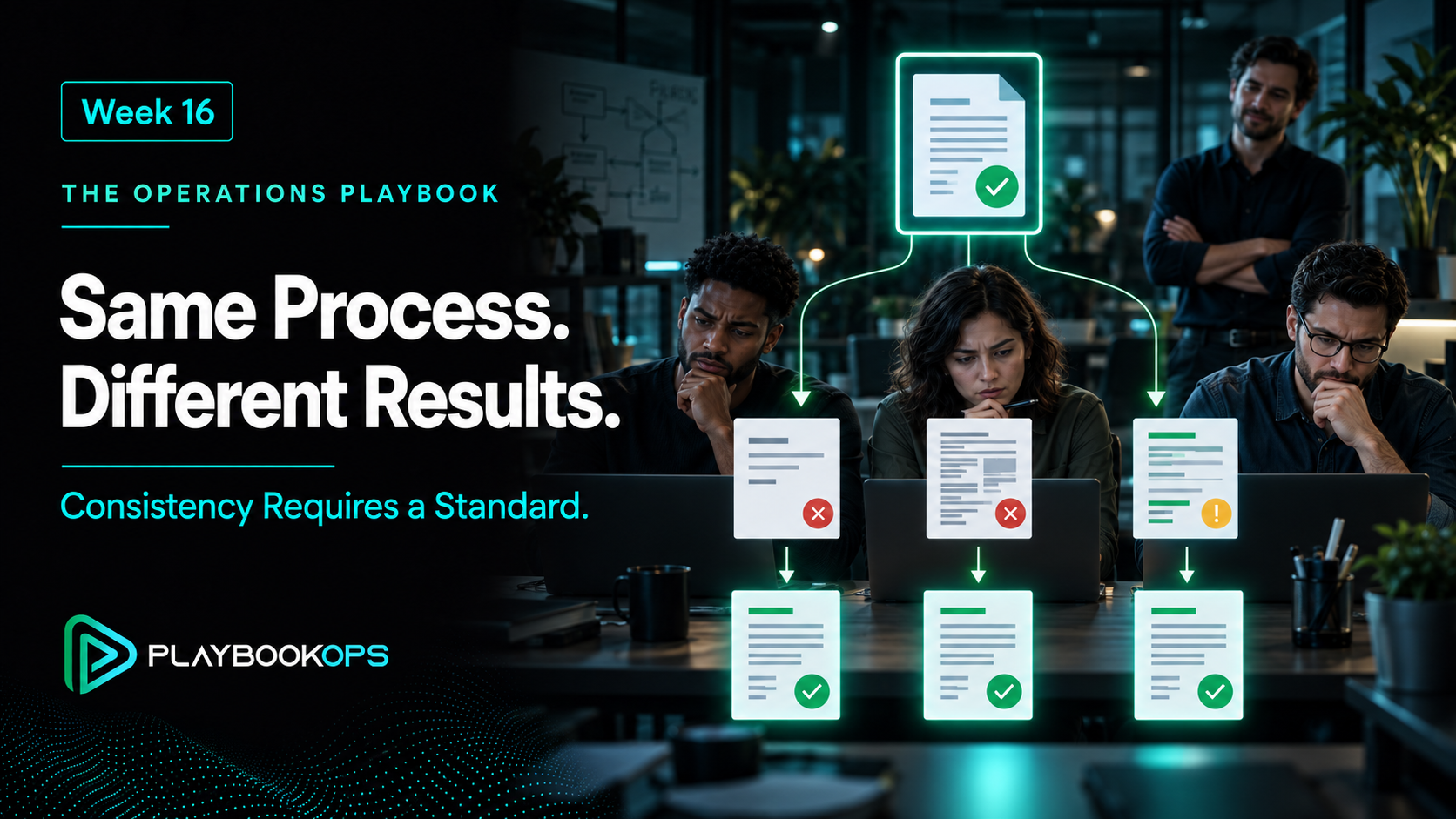 The Execution GapWeek 16 - Same Process, Different Results: Why SOPs Don’t Create ConsistencyAn SOP explains the steps, but consistency requires a shared definition of “done right.” Clear standards, measurable QA, and ownership turn individual interpretation into reliable team execution.August 31, 20264 min readRead full article →
 The Execution GapWeek 15 - Documented Chaos: Why SOPs Don’t Create ExecutionDocumentation does not change behavior by itself. SOPs reduce founder dependency only when they are embedded in daily workflows, tied to ownership and decisions, and reinforced through accountability and feedback.August 28, 20264 min readRead full article →
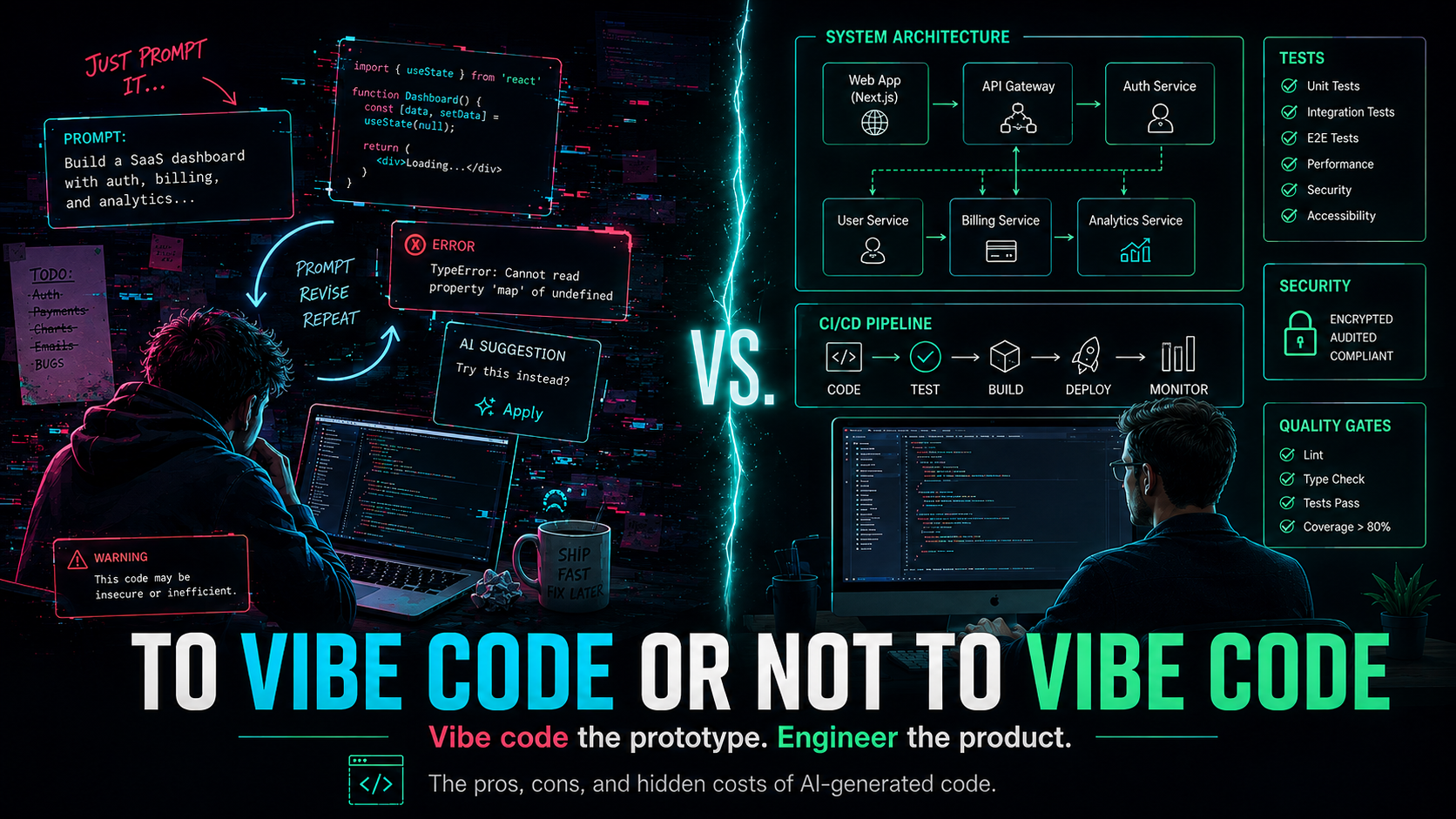 AI for OperationsVibe Coding vs Traditional Software Development : When AI Coding Saves You Weeks and Costs You MonthsVibe coding is incredible for prototypes, experiments, and fast learning—but speed can create false confidence. The real risk starts when a prototype becomes a product without architecture, testing, security, or someone who truly understands the code.August 27, 202610 min readRead full article →
 The Execution GapWeek 14 - Don’t Automate Confusion: Clarity Comes Before AutomationAutomation scales the process it receives. When that process is unclear, tools multiply inconsistency and pull the founder back in. Understand and document the work before automating it.August 26, 20262 min readRead full article →
 The Execution GapWeek 13 - You Became the System. PlaybookOps Is How You Get OutFounder dependency persists when business knowledge lives in one person’s head. PlaybookOps turns that knowledge into usable systems the team can follow, moving the business from documentation to execution and independence.August 25, 20266 min readRead full article →
 The Execution GapWeek 12 - Delegation Isn’t Task Handoff. It’s Ownership Transfer.Delegation fails when founders hand off tasks but retain decisions. Transfer ownership by defining the outcome, decision authority, and success criteria so the team can act without pulling you back in.August 24, 20263 min readRead full article →
 The Execution GapWeek 11 - Great People, Inconsistent ResultsGreat people produce inconsistent results when the standard lives in the founder’s head. Define the outcome, reliable steps, and “done right” so the team can execute confidently without constant escalation.August 21, 20262 min readRead full article →
 The Execution GapWeek 10 - Simplify, Then Standardize: The Path Beyond Founder BurnoutSimplification removes excess, but standardization reduces founder dependency. Define clear defaults for recurring decisions so your team can execute consistently without waiting for your judgment.August 21, 20264 min readRead full article →
 SOPs and DocumentationWeek 9 - Growth Was Supposed to Make This EasierGrowth becomes heavier when revenue outpaces operational clarity. Standardizing decision logic, authority, and escalation rules helps teams act confidently without routing every variation back to the founder.August 20, 20264 min readRead full article →
 The Execution GapWeek 8 - The Simplification Scorecard: Prevent Complexity CreepSimplification creates relief, but visibility makes it last. Track five signs of returning complexity each week so you can strengthen the system before founder dependency and burnout quietly rebuild.August 19, 20264 min readRead full article →
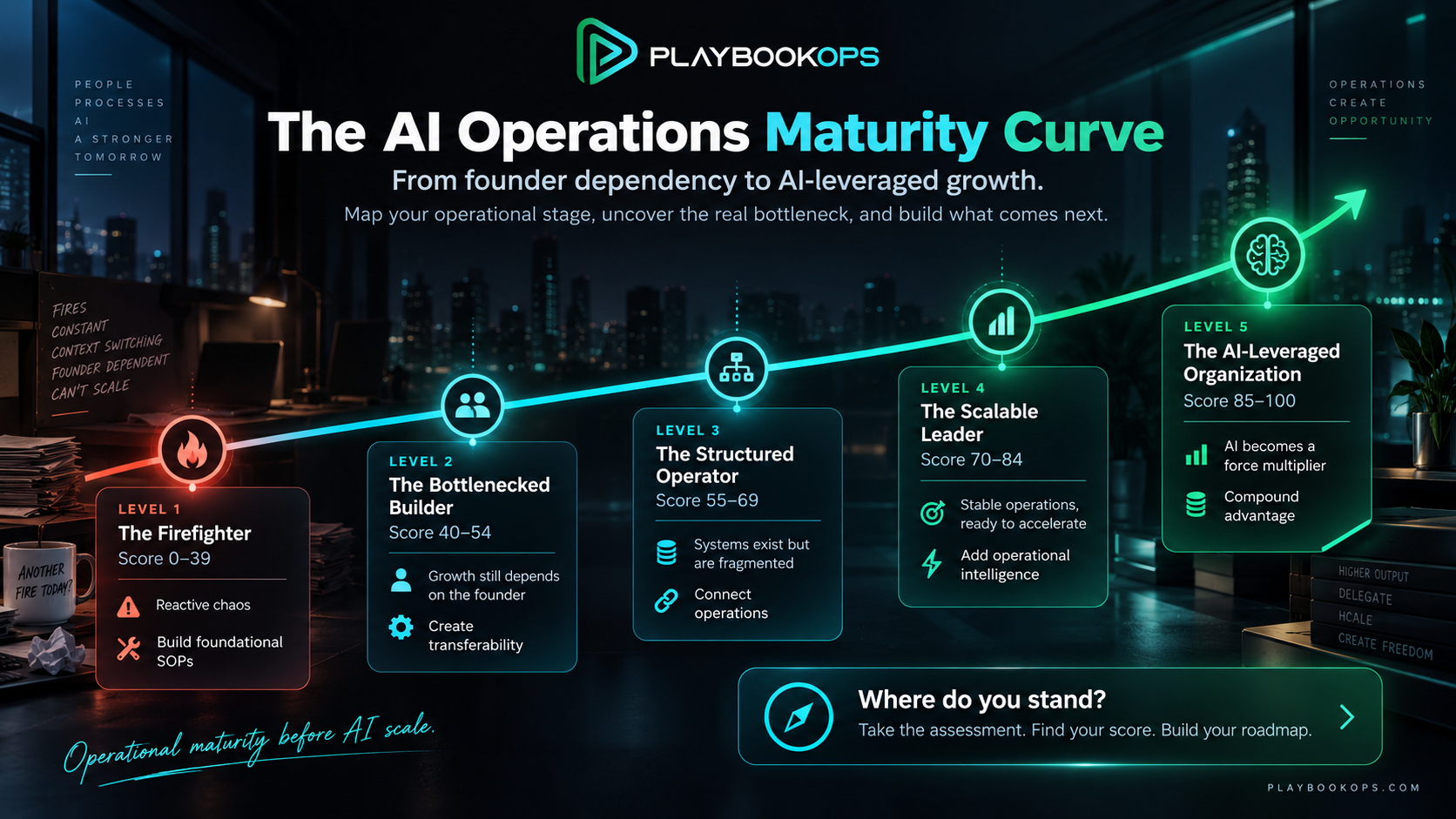 The Execution GapThe AI Maturity Curve: Navigating from Founder Dependency to AI-Driven Market DominanceScale your business using the AI Operations Readiness Framework. Move from a reactive Firefighter to an AI-Leveraged Organization by building operational maturity—shifting from simple tool adoption to competitive compounding for market dominance.August 18, 20264 min readRead full article →
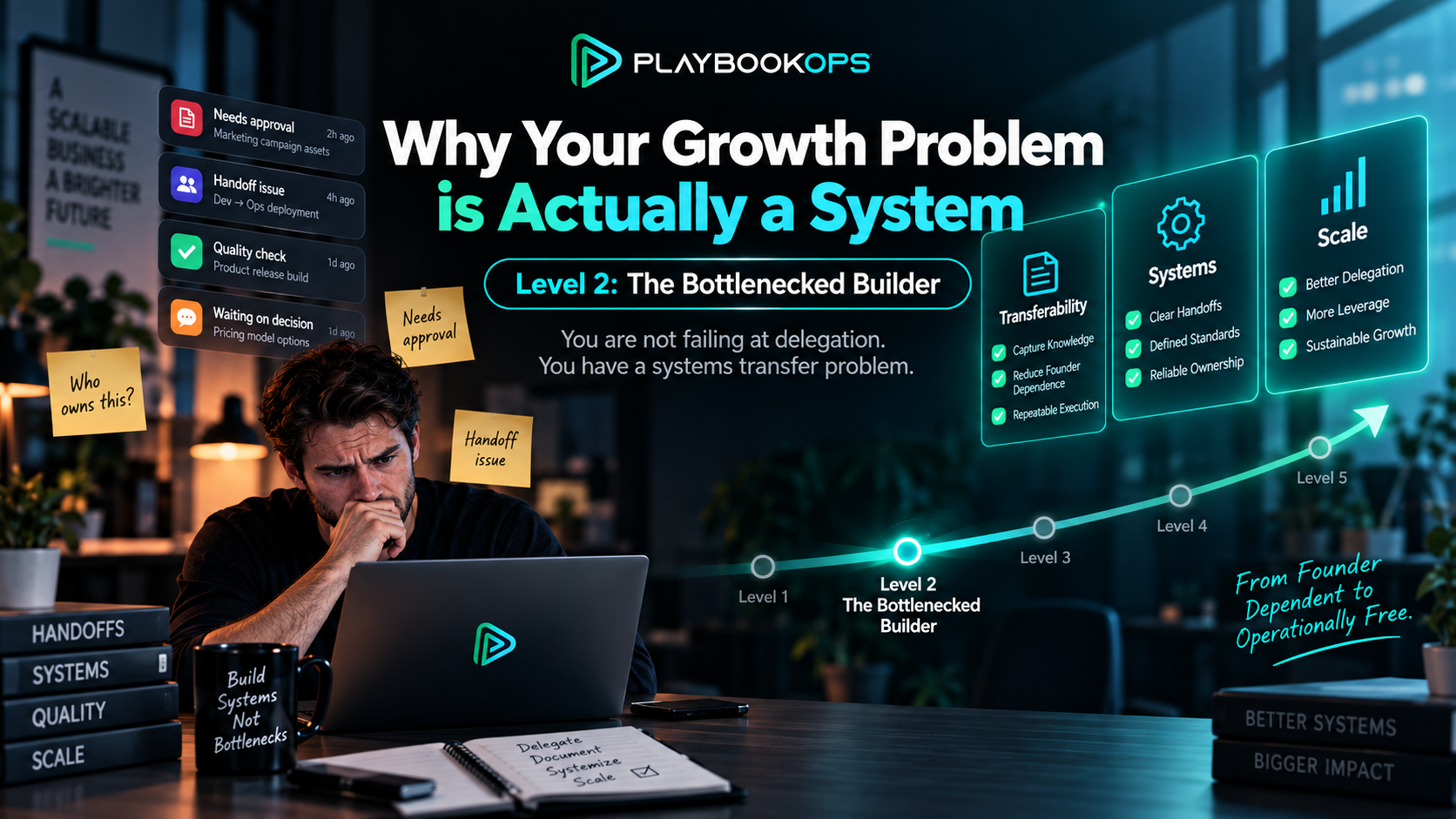 The Execution GapLevel 2 - The Bottlenecked Builder: Why Your Growth Problem is Actually a Systems Transfer ProblemLevel 2: The Bottlenecked Builder is the Dependency Danger Zone. Growth feels painful because systems rely entirely on founder memory, making them the ultimate bottleneck. To scale, they must shift from founder dependency to operational transferability.August 18, 20262 min readRead full article →
 The Execution GapWeek 7 - Process Bloat: Why More Documentation Keeps You the BottleneckDocumentation creates little relief when the team still needs you to interpret it. Reduce process bloat by making recurring work easy to follow, with fewer decisions, interruptions, and opportunities for rework.August 18, 20262 min readRead full article →
 The Execution GapWeek 6 - The Critical 20%: Which Business Processes to Document FirstStart with the workflows that repeatedly pull you back into the business. The Critical 20% uses interruptions, exceptions, handoffs, and founder dependency to identify which processes to document first.August 17, 20265 min readRead full article →
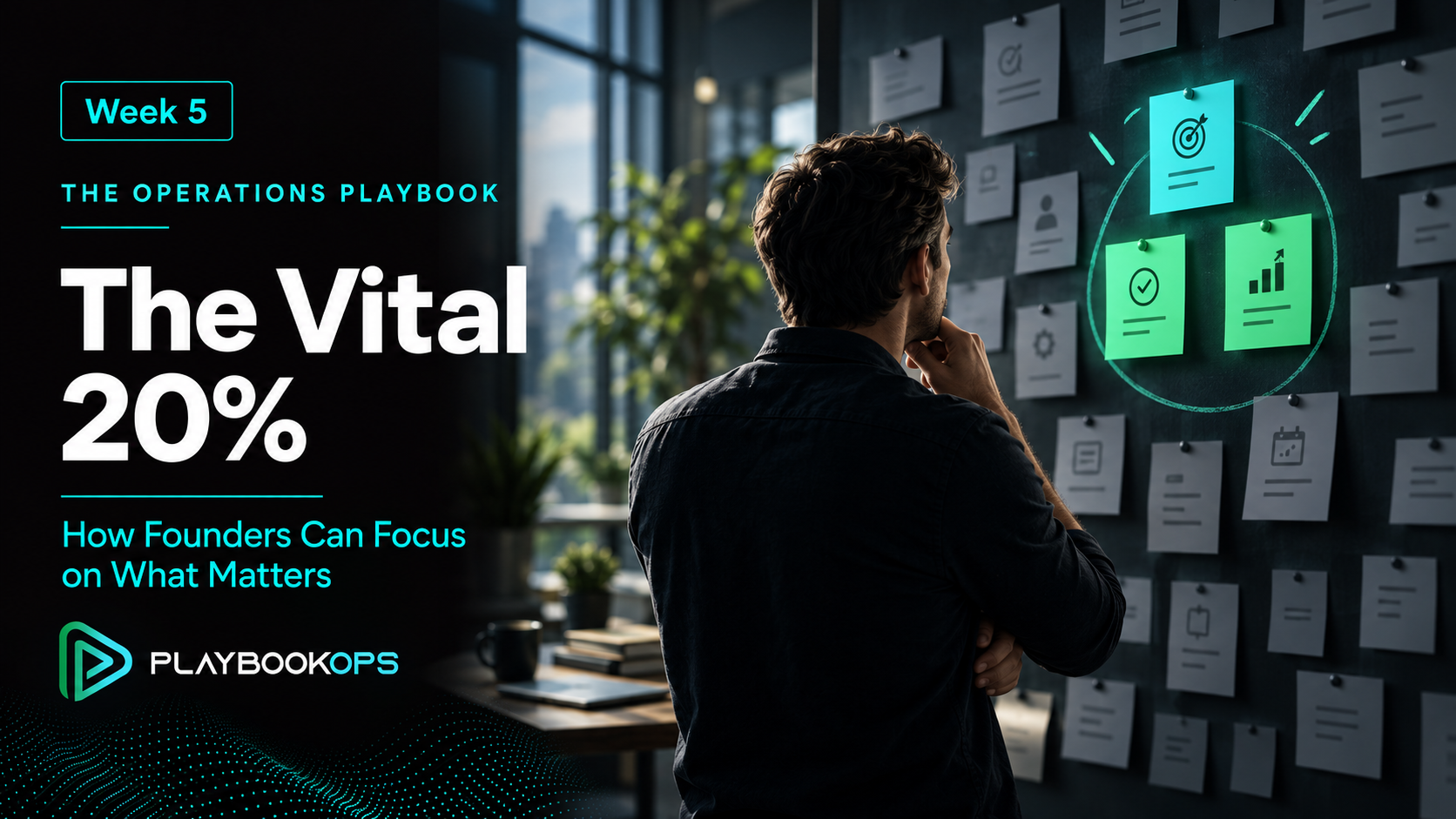 AI for OperationsWeek 5 - The Vital 20%: How Founders Can Focus on What MattersWhen every task gets equal attention, the founder becomes the system. The Vital 20% helps leaders identify the actions and processes that drive results, prevent breakdowns, and reduce dependence on their constant involvement.August 14, 20266 min readRead full article →
 The Execution GapWeek 4 - Founder Burnout: Why Simplifying Your Business Comes FirstFounder burnout can signal that your business relies on your memory and decisions. Simplifying recurring work, handoffs, and exceptions reduces operational drag and creates a clearer foundation for growth and AI.August 13, 20264 min readRead full article →
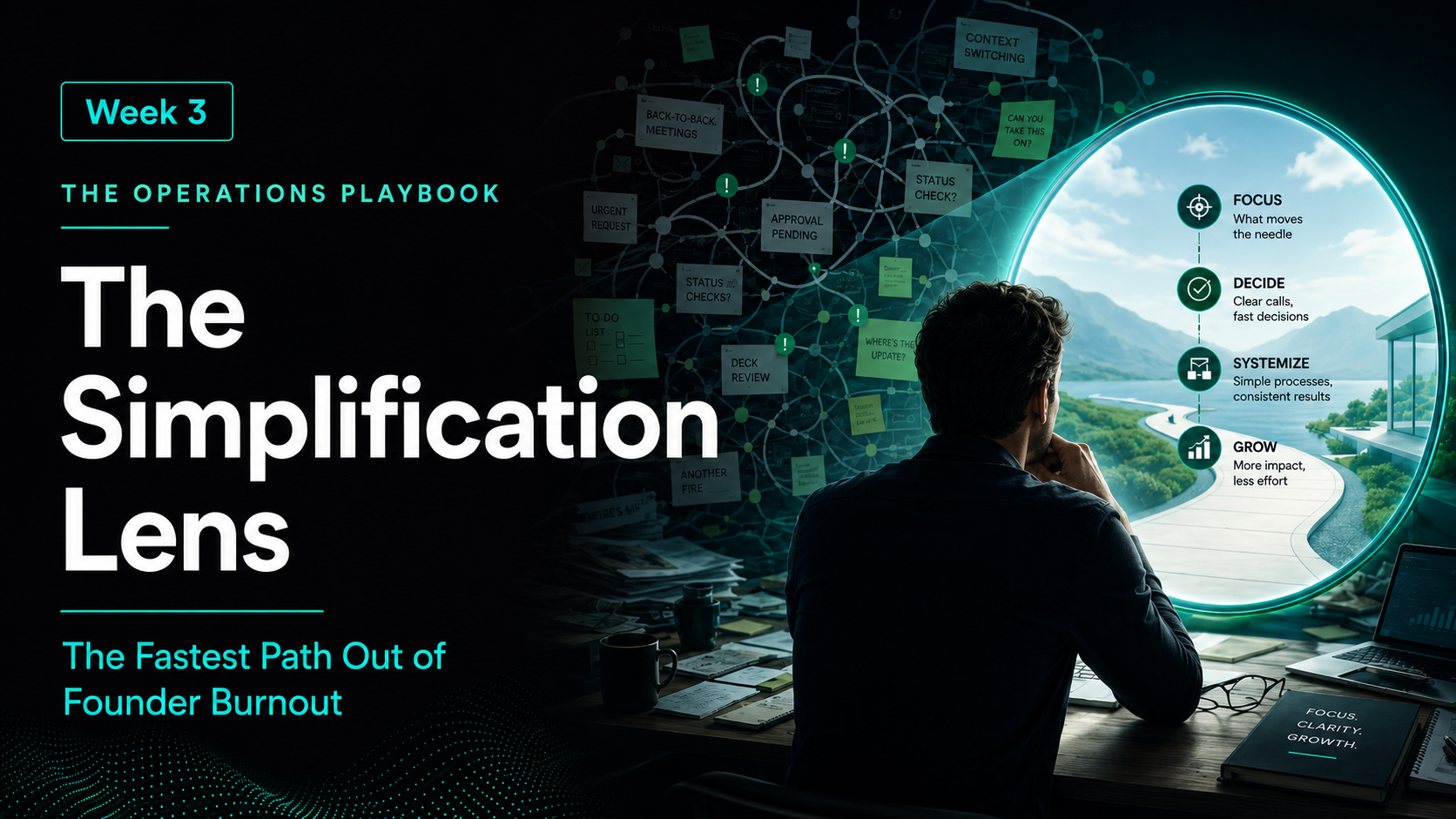 The Execution GapWeek 3 - The Simplification Lens - The Fastest Path Out of Founder BurnoutFounder burnout often reflects a business that depends on constant intervention. The Simplification Lens helps leaders question recurring work, protect quality, and create capacity for systems the team can follow.August 6, 20266 min readRead full article →
 Training and KnowledgeYour Best Employee Knows What to Notice. Have You Captured It?Your experienced employee catches what others miss. Explore how to capture the clues, reasoning, and checks behind that judgment, then review and practice the instruction with your team.October 1, 20266 min readRead full article →
 AI for OperationsWhen AI Gets Stuck, Does the Work Still Come Back to You?AI may organize the request while the decision still waits for you. Give one recurring exception a clear owner, the right context, and a defined return to work.September 24, 20265 min readRead full article →
 The Execution GapWeek 24 - The Execution Gap: Why Your Business Can’t Scale Beyond YouYou can delegate execution and still remain the bottleneck when you must manually reconstruct what is happening. Closing the Visibility Gap means the business surfaces exceptions, ownership, and stalled work without requiring the founder to search for answers.September 17, 20268 min readRead full article →
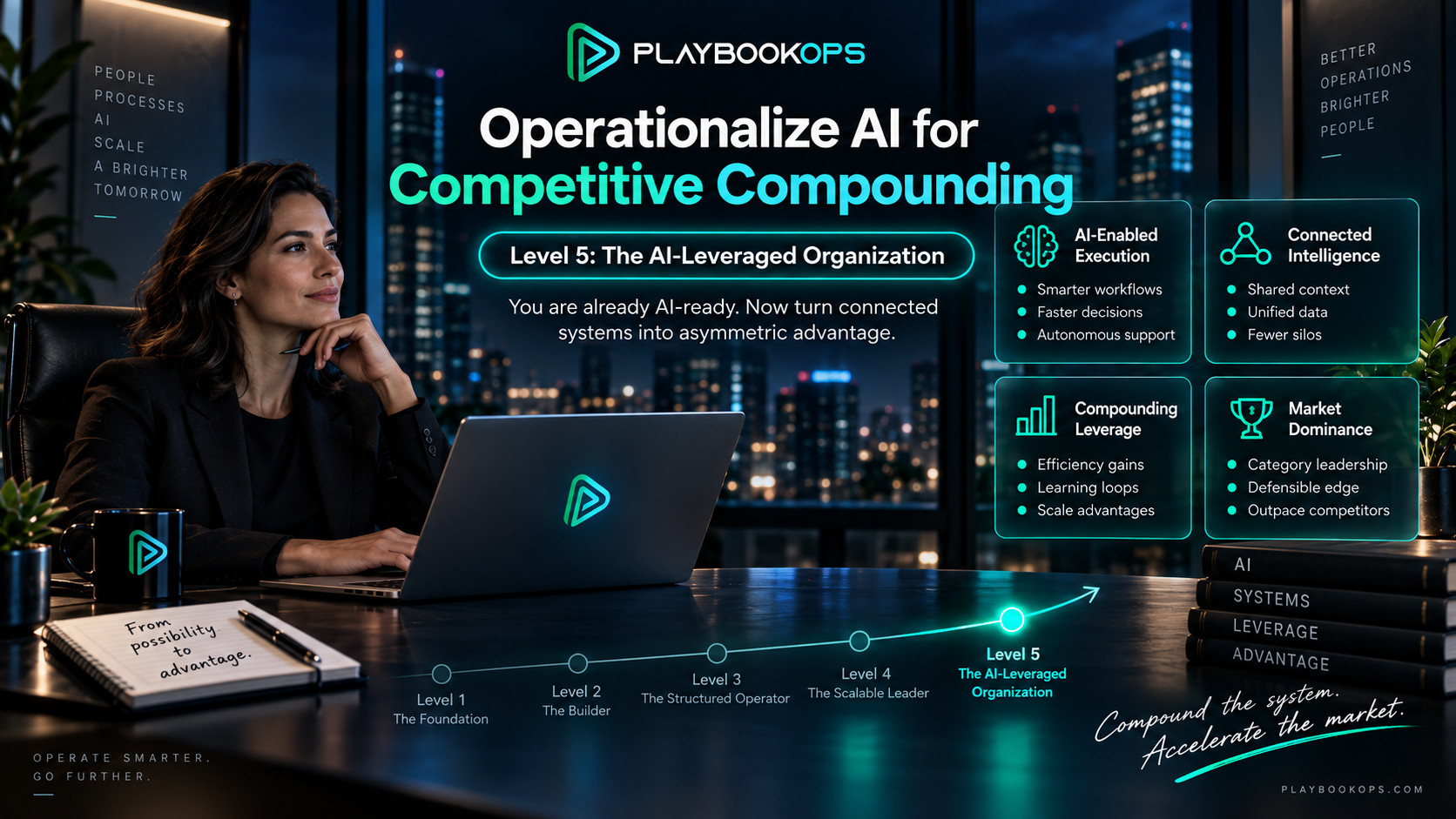 The Execution GapLevel 5 - Operationalize AI for Competitive CompoundingLevel 5: The AI-Leveraged Organization represents the peak of maturity. With low founder dependency and strong systems, the goal is total dominance. To win, you must operationalize AI faster than competitors to achieve an asymmetric, compounding advantage.August 18, 20262 min readRead full article →
 The Execution GapLevel 4 - Operational Intelligence for Scalable Leaders | PlaybookOpsLevel 4: The Scalable Leader represents operational stability. While processes run smoothly, securing category dominance requires shifting from static systems to operational intelligence—using connected workflows and AI-enhanced execution to prevent competitor disruption.August 18, 20262 min readRead full article →
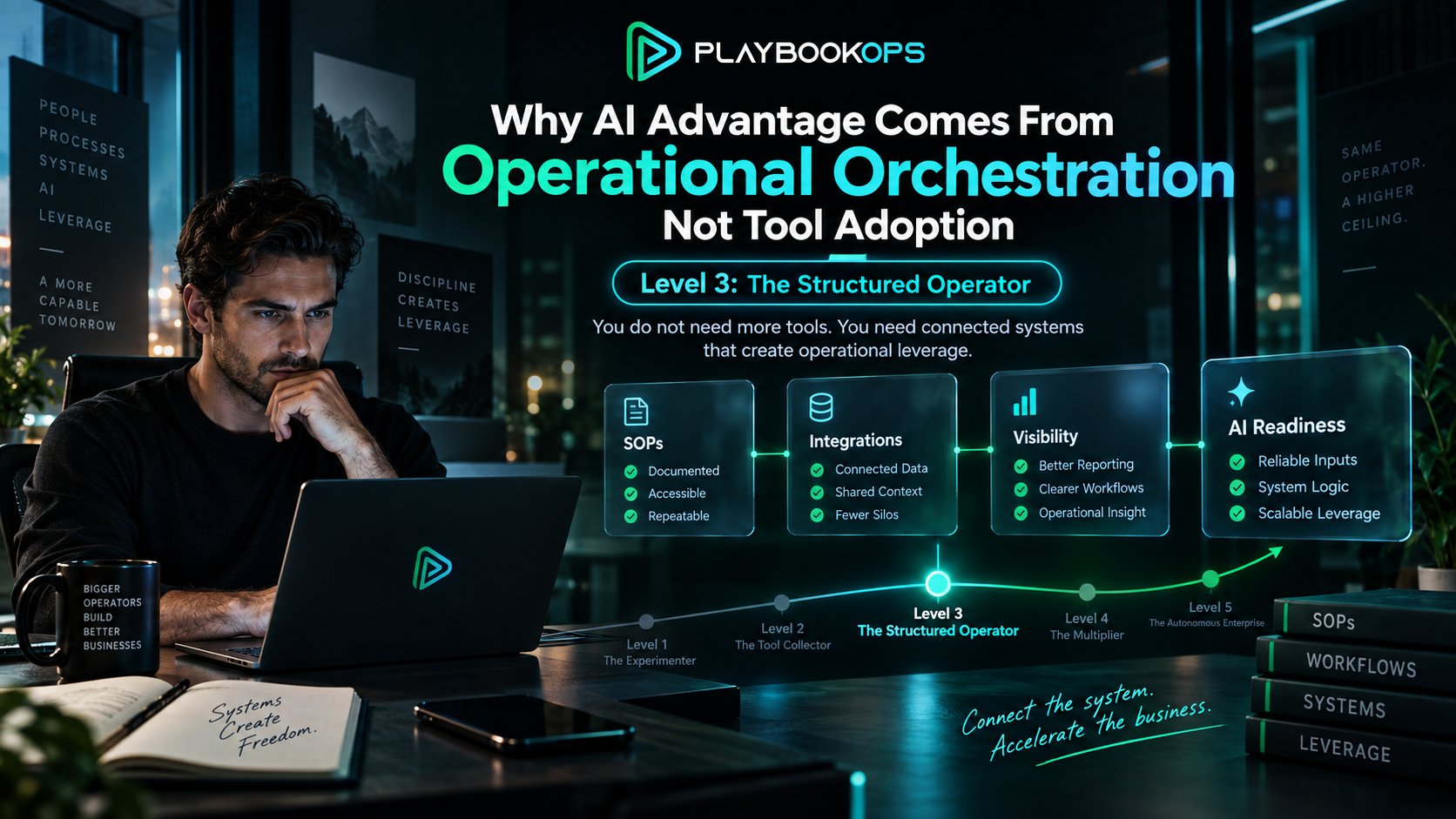 The Execution GapThe Level 3 - The Structured Operator: Why AI Advantage Comes From Operational Orchestration, Not Tool AdoptionLevel 3: The Structured Operator is in the Operational Risk Zone. SOPs exist, but disconnected systems stall scaling. True AI advantage requires shifting from tool adoption to operational orchestration to integrate workflows and eliminate costly team silos.August 18, 20262 min readRead full article →
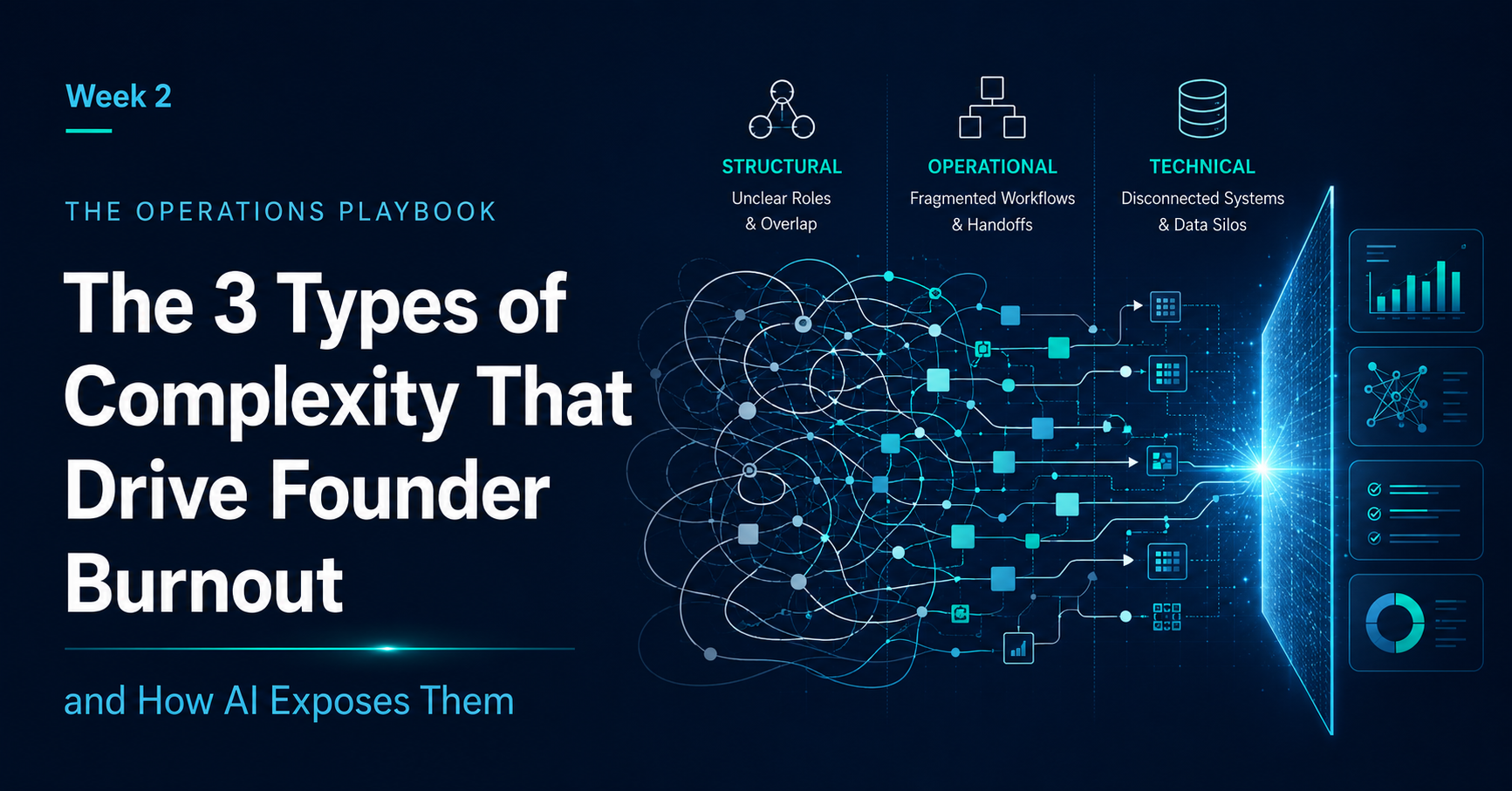 The Execution GapWeek 2 - Founder Burnout from Business ComplexityWeek 2 of The Operations Playbook breaks down the 3 types of complexity that quietly slow service businesses down—and why they drive founder burnout. If hiring hasn’t created relief, this will explain why.July 7, 20265 min readRead full article →
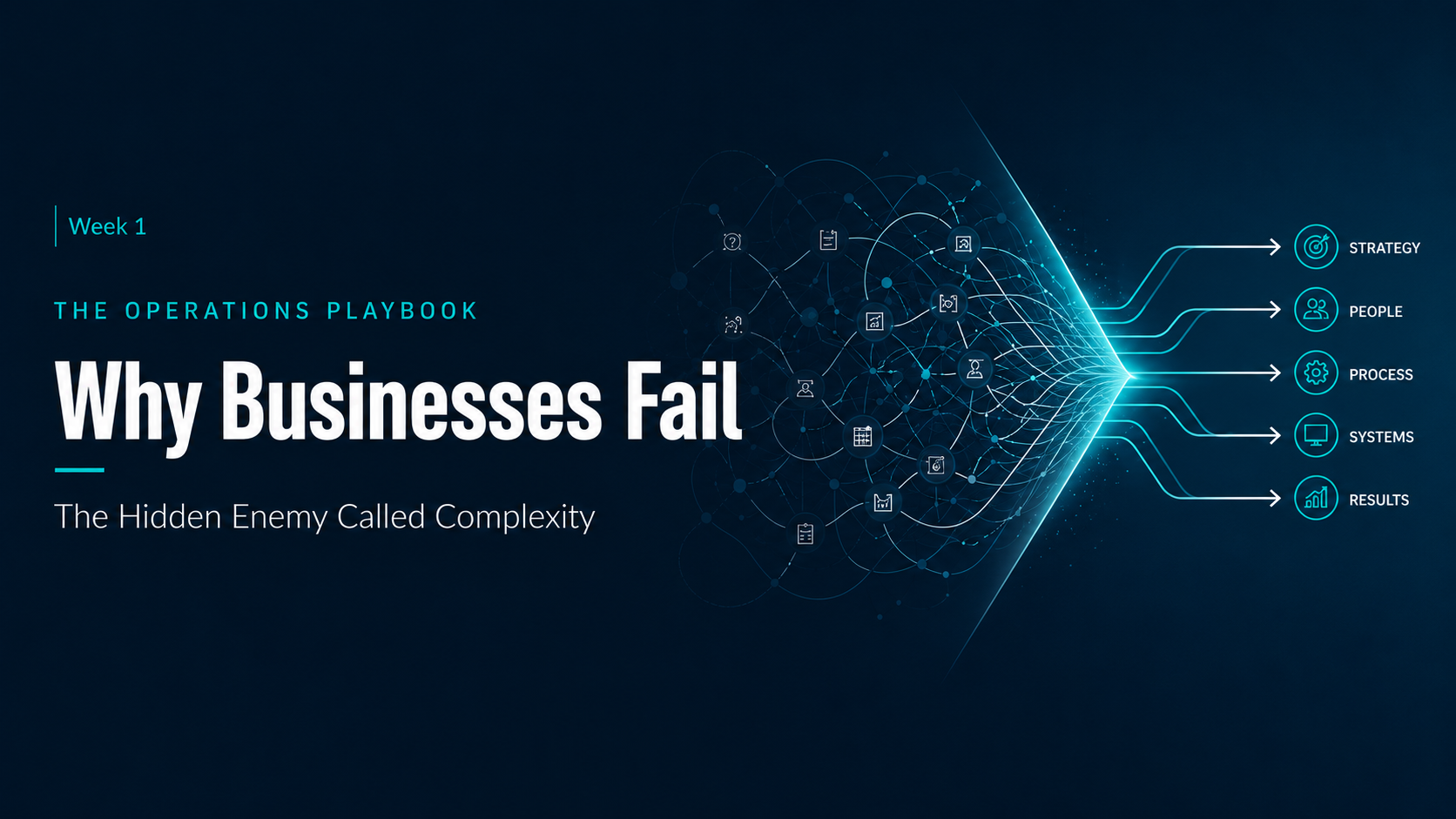 The Execution GapWeek 1: Why Businesses Fail: The Hidden Enemy Called ComplexityRead the complete PlaybookOps operational insight.July 5, 20263 min readRead full article →
MOVE FROM INSIGHT TO EXECUTION
Start with one process the business should not need you to explain again.
Talk it through. PlaybookOps turns the conversation into a structured playbook your team can use.
Build Your First Playbook →